February 16, 2026
Edward Driggers, PhD
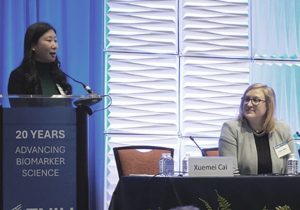
As I write this, I am returning from a terrific couple of days in Bethesda, Maryland, attending the 20th Anniversary FNIH Biomarkers Consortium Symposium. What an inspiring event! And what a brilliant and selfless group of scientists, clinicians, and policy makers to spend time with.
At the anniversary occasion I felt honored to be invited to participate in one of the symposium discussion panels, “From Discovery to Impact: What’s next for epigenomics and blood-based biomarkers?”, led by Xuemei Cai, Senior Medical Director and Global Clinical Lead at Pfizer. Other participants were Laura Mictic, President of The Bluefield Project to Cure Frontotemporal Dementia; Susan Schindler, Associate Professor of Neurology, Washington University School of Medicine; Steffan Ho, VP and Head of Translational Oncology at Pfizer; Carol Taylor-Burds, Program Director at the NIH’s National Institute of Neurologic Disorders and Stroke; and Soma Ghosh, Director in the Division of Molecular Genetics and Pathology, Office of In Vitro Diagnostics, CDRH, FDA. The panel facilitated a discussion and addressed audience questions on topics related to blood-based biomarkers for various drug discovery and development purposes, with a focus on several of the active FNIH projects in which the panelists are involved. GMet has been a part of the Biomarkers Consortium (BC) for about two years now, and during this time we have become a part of the BC’s Metabolic Disorders Committee, under which we contribute to the REAL BODY project, targeting the evaluation of technologies towards the redefinition of obesity and body composition beyond the limited metric of BMI.
Some History on the FNIH
The Foundation for the National Institutes of Health (FNIH) emerged out of a convergence of issues that evolved in the 1970’s and 80’s: a drive for U.S. scientific expansion and, at the same time, fiscal constraint. By the late 1980s, biomedical research was advancing rapidly—molecular genetics, monoclonal antibodies, and early genomics were transforming the research landscape—yet the NIH operated within rigid appropriations structures that (appropriately) limited its ability to accept private funds or convene multi-sponsor collaborations. At the same time, Congress had already signaled a broader policy shift toward commercialization of tools and technologies that were rapidly evolving (e.g. molecular genetics, mAB’s, etc. as mentioned above). Patient advocacy movements, especially in HIV/AIDS, were also reshaping expectations around translational speed and public accountability. Against this broad backdrop, lawmakers sought a flexible, non-federal vehicle that could mobilize private capital in support of NIH priorities without compromising federal oversight or ethical research standards. The NIH Revitalization Act of 1990 formally established the FNIH as that vehicle: a congressionally chartered, independent nonprofit designed to catalyze public–private biomedical collaboration.
In its early years, the FNIH drew support from major pharmaceutical firms, biotechnology companies, philanthropic foundations, and patient advocacy organizations that saw value in structured precompetitive collaboration. Industry leaders recognized that certain early-stage scientific bottlenecks—such as target discovery and biomarker standardization—could be inefficient to address in isolation. In addition, philanthropic actors, including large disease-focused foundations, were motivated by the opportunity to align their private giving with NIH’s areas of scientific depth and impact. Over time, this ecosystem matured into large-scale initiatives such as the Accelerating Medicines Partnership (AMP), launched in 2014. AMP brought together NIH, the FDA, multiple global pharmaceutical companies, and nonprofit organizations to jointly identify and validate drug targets in areas such as Alzheimer’s disease, autoimmune disorders, schizophrenia, and type 2 diabetes. While AMP postdated FNIH’s creation by two decades, it reflected the original vision: pooling resources and data in the precompetitive space to de-risk downstream therapeutic development.
The formation of the FNIH Biomarkers Consortium in 2006 grew from a related but more specific set of pressures within translational science and regulatory policy. By the early 2000s, drug development timelines were lengthening, attrition rates were rising, and there was widespread recognition that poorly validated biomarkers contributed to late-stage clinical failures. Simultaneously, the FDA’s Critical Path Initiative called for improved scientific tools—including qualified biomarkers and surrogate endpoints—to modernize medical product development. The Biomarkers Consortium arose as a multi-part collaboration among NIH, FDA, industry, and nonprofit stakeholders, under the umbrella of the FNIH, to develop and qualify biomarkers in a precompetitive setting. Its creation reflected a policy realization that evidentiary standards for biomarkers required shared data, standardized methodologies, and regulatory engagement from the outset—conditions that neither government nor industry could efficiently achieve alone.
Back to Present Day
This anniversary was an opportunity to celebrate some of the major achievements of the BC over the last 20 years. For example, developing the first FDA-Qualified surrogate endpoint for osteoporosis, based on 24-month treatment-related percent change in hip bone density (measured by DEXA), along with two other FDA accepted surrogate endpoint markers (in ALL and breast cancer). The BC also enabled generation of the first FDA-qualified safety biomarker for acute kidney injury. Beyond these specific biomarkers, the BC has supported 20+ new and/or expanded FDA drug approvals, a large number of scientifically validated methods, materials, and measures for regulatory and clinical decision making. For more details on these and other aspects of the first two decades of the BC, see https://www.nature.com/articles/d41573-025-00187-8 , a terrific write-up in Nature Reviews Drug Discovery.
Based on my two years of working with the FNIH Biomarkers Consortium, I would add that one of the most impressive accomplishments that the BC can claim is assembling an amazing collection of committed and innovative biomarker advocates from across the public and private landscape: it is an honor and inspirational to work with this terrific group. Congratulations on 20 years, BC, keep up the amazing work!